








PCB Outline Tolerance Guide: Is ±0.05 mm Necessary, Achievable, and Worth the Cost?
A ±0.05 mm PCB outline tolerance is achievable , but it represents the upper limit of standard PCB manufacturing capability rather than an economical production specification. Similar to a car reaching its maximum speed, it is technically possible, yet doing so consistently requires specialized processes, stricter material control, higher inspection standards, and often significantly higher costs. For most electronic applications, ±0.15 mm remains the most cost-effective and reliable industry standard , while ±0.10 mm has become the mainstream choice for high-precision requirements . The key is not pursuing the tightest tolerance possible, but selecting the tolerance that best balances performance, manufacturability, lead time, and total project cost.
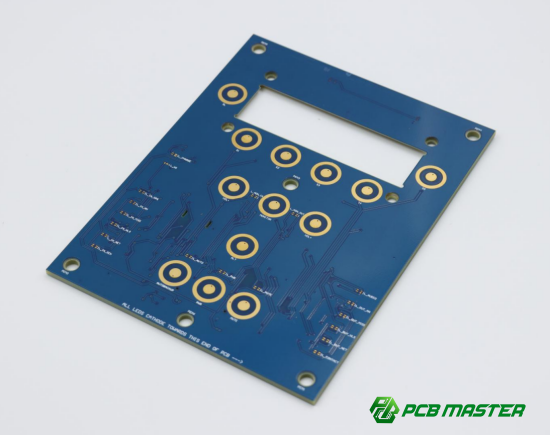
Understanding Standard PCB Outline Tolerance Capabilities
PCB outline tolerances vary depending on manufacturing methods, materials, board structures, and production volume. In practice, the industry generally falls into three categories.
The Most Common Choice: ±0.15 mm
For the majority of FR-4 PCBs manufactured using conventional CNC routing processes, ±0.15 mm is considered the standard specification.
This tolerance offers:
- Excellent manufacturability
- Stable yields
- Lower production costs
- Faster turnaround
- High consistency across production batches
For most industrial electronics, consumer products, communication devices, and control systems, this level of precision is more than sufficient.
High-Precision Standard: ±0.10 mm
When tighter mechanical fit is required, ±0.10 mm is widely achievable and has become the industry's practical "high-precision" benchmark.
Typical applications include:
- Automotive electronics
- Precision connectors
- Compact industrial modules
- Medical electronics assemblies
- Tight enclosure integration
In panelized designs using V-scoring (V-CUT) , the final separated board tolerance usually falls around ±0.15 mm , while optimized processes may achieve approximately ±0.10 mm .
Some manufacturers may also offer intermediate specifications such as:
- ±0.13 mm
- ±0.20 mm
depending on their process capabilities.
Extreme Capability: ±0.05 mm
A ±0.05 mm outline tolerance belongs to the realm of special manufacturing capability .
Under specific conditions involving precision tooling, advanced positioning methods, or laser processing, achieving this level of accuracy becomes feasible.
However, it should be viewed as an exception rather than a default manufacturing standard .
Why ±0.05 mm Is Considered the "Ceiling" of PCB Outline Accuracy
Achieving ±0.05 mm requires multiple critical factors to be tightly controlled throughout the manufacturing process.
Precision Processing Methods
Precision Stamping Dies
The most mature approach for achieving ±0.05 mm tolerance is precision punch tooling.
Advantages:
- Extremely consistent dimensions after tool validation
- Very high production efficiency
- Excellent repeatability
Challenges:
- High tooling investment
- Shorter mold lifespan
- Less flexibility for design revisions
Laser Cutting for Thin PCBs
For thin substrates and specialized applications, laser cutting has emerged as an effective alternative.
Benefits include:
- Minimal mechanical stress
- High contour accuracy
- Reduced tool wear
- Superior performance on flexible materials
For suitable board structures, laser processing can achieve ±0.05 mm without significant technical difficulty .
Material Stability Matters
PCB materials expand and contract during manufacturing.
Processes such as:
- Lamination
- Exposure
- Baking
- Environmental humidity fluctuations
all contribute to dimensional changes.
Research and production experience indicate that when material dimensional variation exceeds approximately 0.08% , maintaining a ±0.05 mm outline tolerance becomes extremely difficult.
Therefore, manufacturers typically select materials with exceptionally low shrinkage characteristics when ultra-tight tolerances are specified.
Board Size and Geometry Influence Results
Not every PCB is equally capable of meeting extreme tolerances.
Smaller and simpler boards generally perform better.
Factors that increase difficulty include:
- Large board dimensions
- Complex irregular outlines
- Thin substrates
- Frequent temperature fluctuations
- Multi-step machining sequences
As board complexity increases, maintaining ±0.05 mm consistently becomes progressively more challenging.
High-Precision Positioning Is Essential
Mechanical accuracy starts with positioning accuracy.
In most cases, achieving ±0.05 mm requires:
- Dedicated internal tooling holes
- Stable fixture systems
- Precision optical alignment
Without reliable internal reference points, the probability of maintaining such tight tolerances drops dramatically.
Comparing Different PCB Outline Tolerances
Common Misconception: Tighter Is Always Better
In reality, specifying unnecessarily tight tolerances often increases cost without adding functional value.
Tolerance Comparison
| Dimension | Typical Industry Standard | PCBMASTER Best Practice |
| Standard PCB Applications | ±0.15 mm | Recommended for optimal cost-performance balance |
| High-Precision Projects | ±0.10 mm | Routinely achievable through optimized processes |
| Extreme Precision Requirements | Special review required | ±0.05 mm achievable under controlled conditions |
| Production Yield | Stable | Maintained through AOI and multi-stage inspections |
| Lead Time Impact | Minimal | Fast turnaround maintained whenever feasible |
| Cost Impact | Lowest | Special tolerances evaluated individually |
| Recommended Use | General electronics | Precision assemblies requiring validated necessity |
Key takeaway: Engineers should define tolerances based on actual assembly requirements rather than theoretical manufacturing limits.
The Hidden Challenges Behind ±0.05 mm
Costs and Lead Times Increase Significantly
Because demand for extreme outline precision remains relatively niche, PCB manufacturers often classify these requirements as special engineering review projects .
This may involve:
- Additional process validation
- Customized tooling
- Engineering approval procedures
- Dedicated quality plans
As a result, quotations and delivery schedules may differ substantially from standard orders.
Material Expansion Reduces Yield
Even standard FR-4 materials exhibit slight dimensional movement.
Factors such as:
- Heat
- Pressure
- Moisture absorption
can shift dimensions enough to push products outside specification.
As tolerance windows narrow, acceptable manufacturing variation shrinks accordingly, reducing production yield.
Equipment and Process Limitations
One of the lesser-known challenges involves CNC router exit behavior .
As routing approaches completion:
- Remaining holding force decreases.
- Vacuum effects may shift the final cut segment.
- Small protrusions or "router nubs" can form.
Manufacturers may compensate using:
- Specialized routing paths
- Auxiliary fixation tapes
- Modified panel support methods
Additionally, excessive spindle runout can introduce cutter deflection errors, further affecting dimensional accuracy.
Inspection Requirements Become Much More Stringent
Measuring ±0.05 mm is almost as demanding as manufacturing it.
Verification often requires:
- Controlled temperature and humidity environments
- Calibrated high-precision measuring equipment
- Standardized inspection procedures
- Trained operators
Even improper measurement techniques can produce misleading results.
Practical Engineering Advice: Balancing Precision and Business Value
After supporting hundreds of thousands of projects worldwide, PCBMASTER has found that the most successful designs are rarely those with the tightest tolerances.
Instead, they are the designs that balance:
- Functional requirements
- Assembly compatibility
- Manufacturing capability
- Cost efficiency
- Delivery expectations
For many applications, ±0.15 mm delivers the highest overall value .
When tighter fitting is necessary, ±0.10 mm often provides the ideal compromise .
Only when the product's mechanical function truly depends on it should ±0.05 mm be specified and validated jointly by both the customer and manufacturer.
PCBMASTER's Approach to High-Precision PCB Manufacturing
As a trusted global PCB and PCBA manufacturing partner, PCBMASTER integrates engineering expertise with advanced manufacturing resources to help customers determine the most appropriate tolerance strategy for their products.
Leveraging certifications including IATF 16949, ISO 9001, UL, and RoHS , PCBMASTER provides comprehensive support from design review through volume production.
Why Engineers Choose PCBMASTER
- Free engineering document review before production
- More than 50 professional engineers providing one-on-one support
- 24-hour rapid prototyping capabilities
- 99.59% on-time delivery performance
- Advanced AOI testing and three-stage quality inspections
- 99.5% product yield rate
- An 80,000㎡ self-owned manufacturing facility
- Flexible PCB, rigid-flex, HDI, high-frequency, metal-core, and conventional PCB production capabilities
- Transparent pricing with no hidden costs
Rather than simply accepting every tolerance request, PCBMASTER works collaboratively with customers to determine whether extreme precision genuinely contributes to product success—and if so, how to achieve it reliably.
Conclusion: The Smartest Tolerance Is the Right Tolerance
A ±0.05 mm PCB outline tolerance is technically achievable , but it should be regarded as a specialized capability rather than a universal design target.
The best engineering decisions are those that optimize the entire project ecosystem—not just a single dimensional specification.
When evaluating PCB outline tolerances:
- Choose ±0.15 mm for maximum efficiency and reliability.
- Select ±0.10 mm when genuine precision requirements exist.
- Reserve ±0.05 mm for applications where its value has been clearly justified through engineering analysis.
Ultimately, successful PCB design is not about chasing the smallest number possible—it's about delivering products that perform reliably, launch on schedule, and remain commercially competitive.
Tags: #PCBTolerance #PCBManufacturing #PCBDesign #PCBA #SMT #PCBMASTER #HighPrecisionPCB #HDIPCB #ElectronicsManufacturing #IndustryInsights
About the Author

Carol Luo
PCB Design EngineerI'm Carol, a PCB Engineer at PCBMASTER with experience in PCB design and manufacturing engineering since 2018. I focus on translating engineering requirements into reliable PCB solutions, with expertise in stack-up design, material selection, and design-for-manufacturing (DFM). I share practical engineering insights from real-world PCB design and production experience.
Visit Carol Luo's Profile